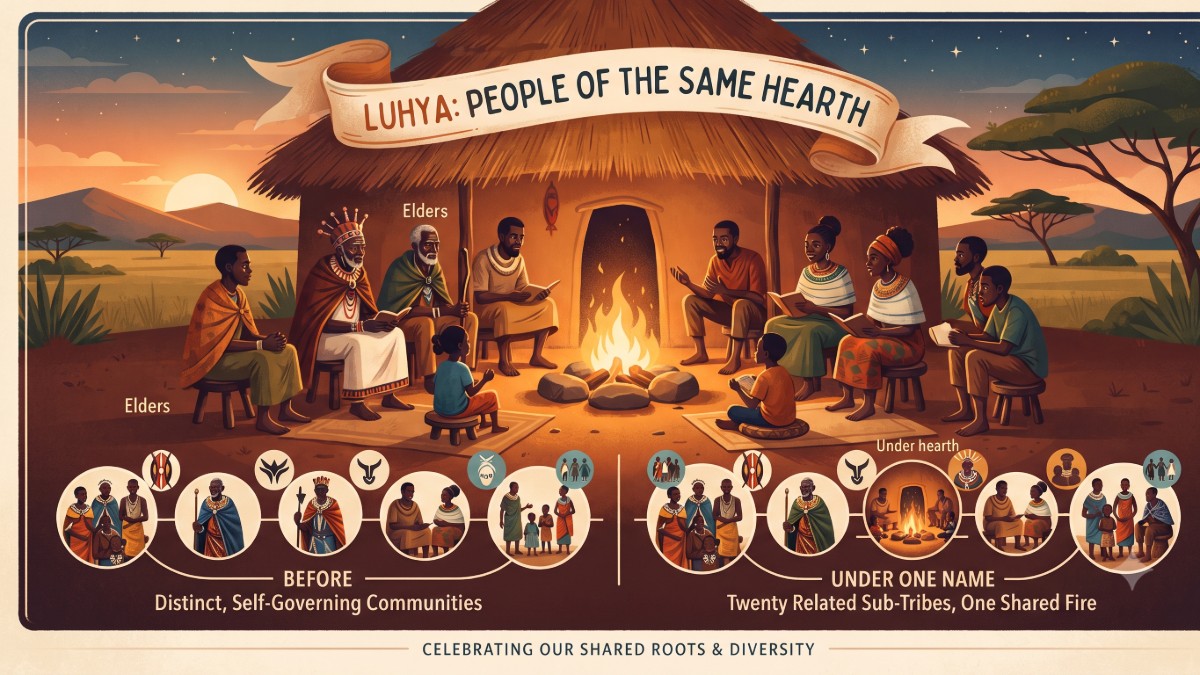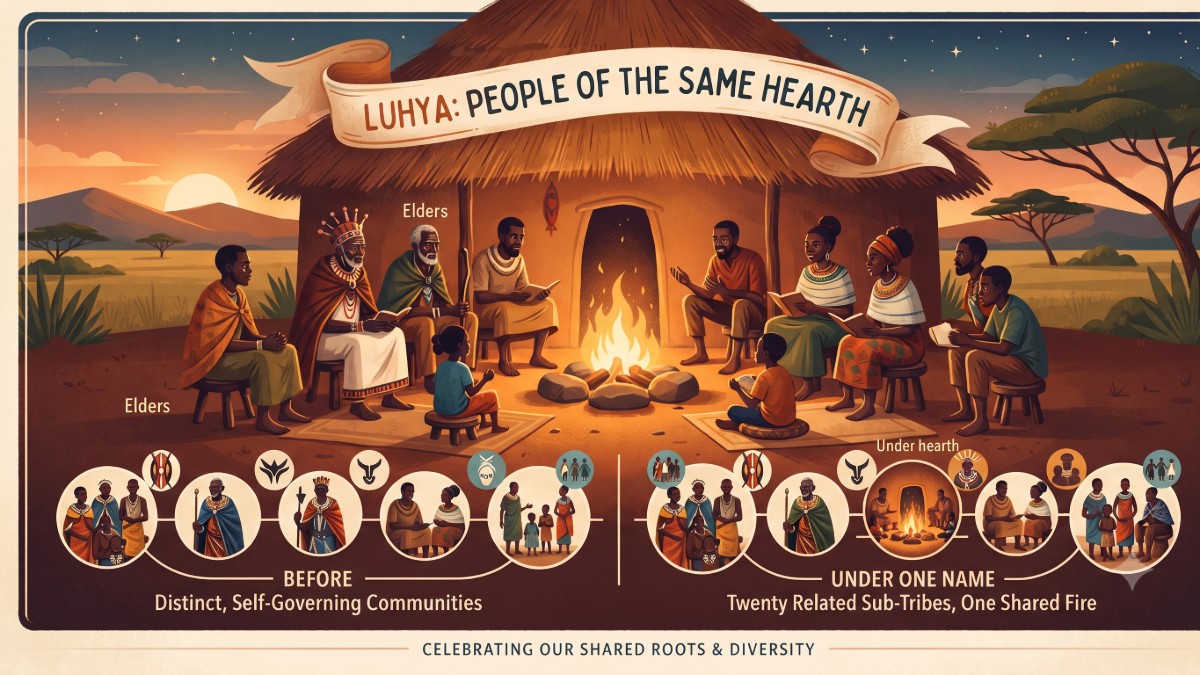
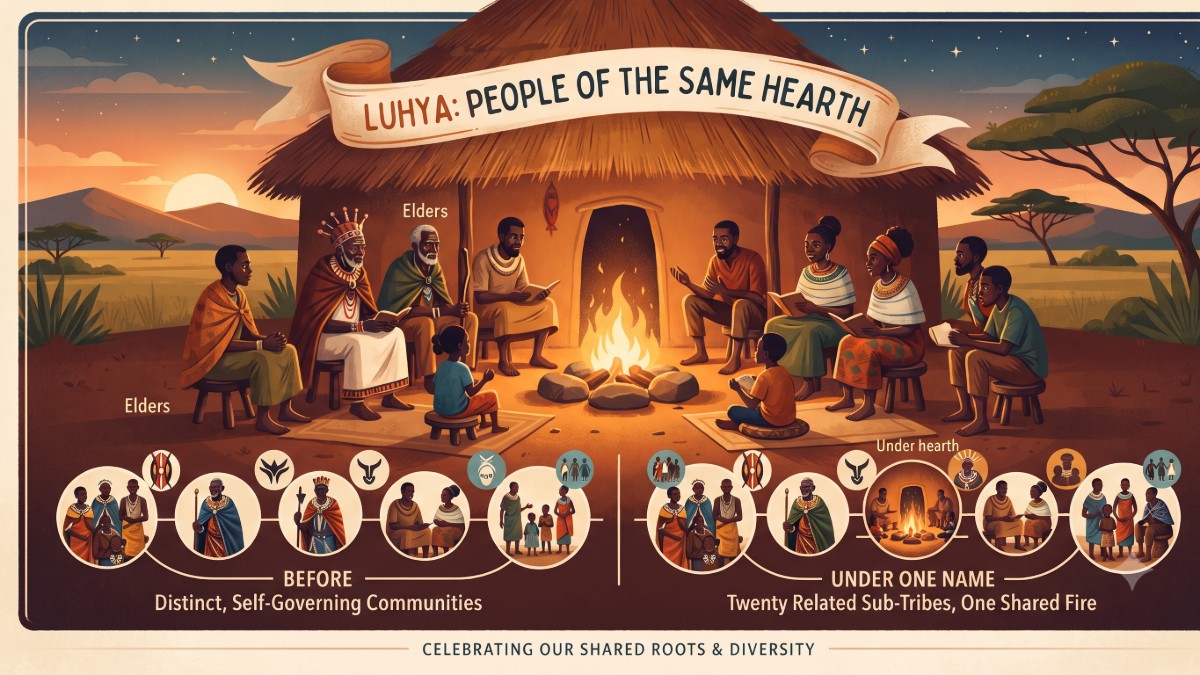
Colonial-era cash crop policy turned much of Luhya land into sugarcane country, reshaping both the economy and the landscape. Mumias Sugar became one of the defining institutions of the region for generations.
Early missionary schools, particularly the Quaker mission at Kaimosi, gave parts of western Kenya some of the earliest access to formal Western education in the country. That early access is part of why the region has such a strong tradition of teachers and academics today.
Land subdivision after independence, combined with high population density, made western Kenya one of the most fragmented agricultural regions in the country. Many Luhya families can trace the shrinking size of their ancestral land across three generations.
Naming customs carried real information before written records did. A child named Wafula was born during the rains, Nekesa during the harvest, Nasimiyu during famine. A name was a small piece of family history.
Story
Culture, roots, and colonial history (Luhya)
SECTION A, PART 4: Culture, roots, and colonial history
Showing an offline copy
•
37 Reads
Tags:
#Kenya
Part of the Culture, roots, and colonial history (Luhya) series
Recommended for You
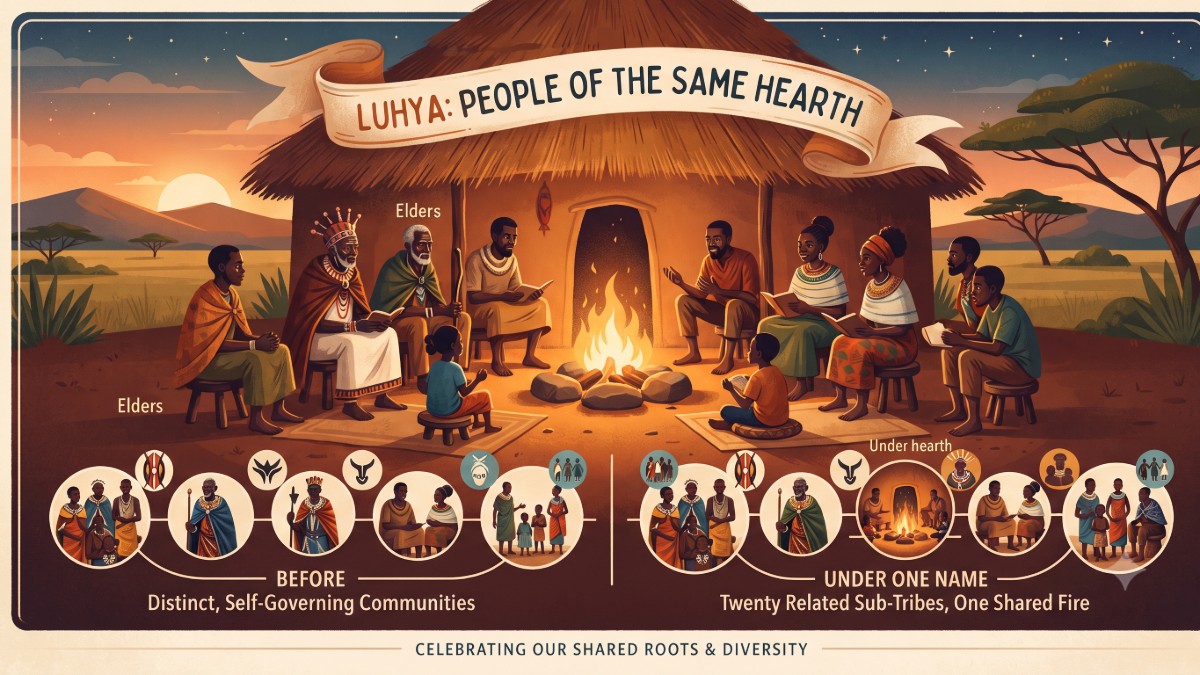
Culture, roots, and colonial history (Luhya)
SECTION A, PART 3: Culture, roots, and colonial history
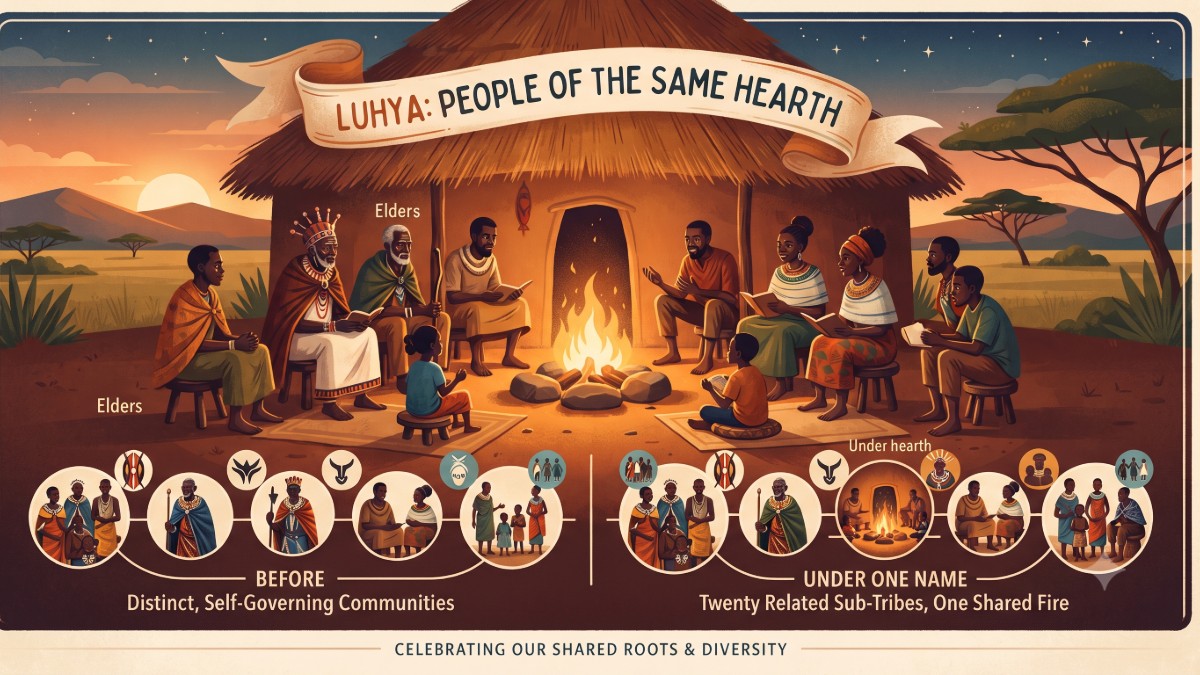
Culture, roots, and colonial history (Luhya)
SECTION A, PART 1: Culture, roots, and colonial history
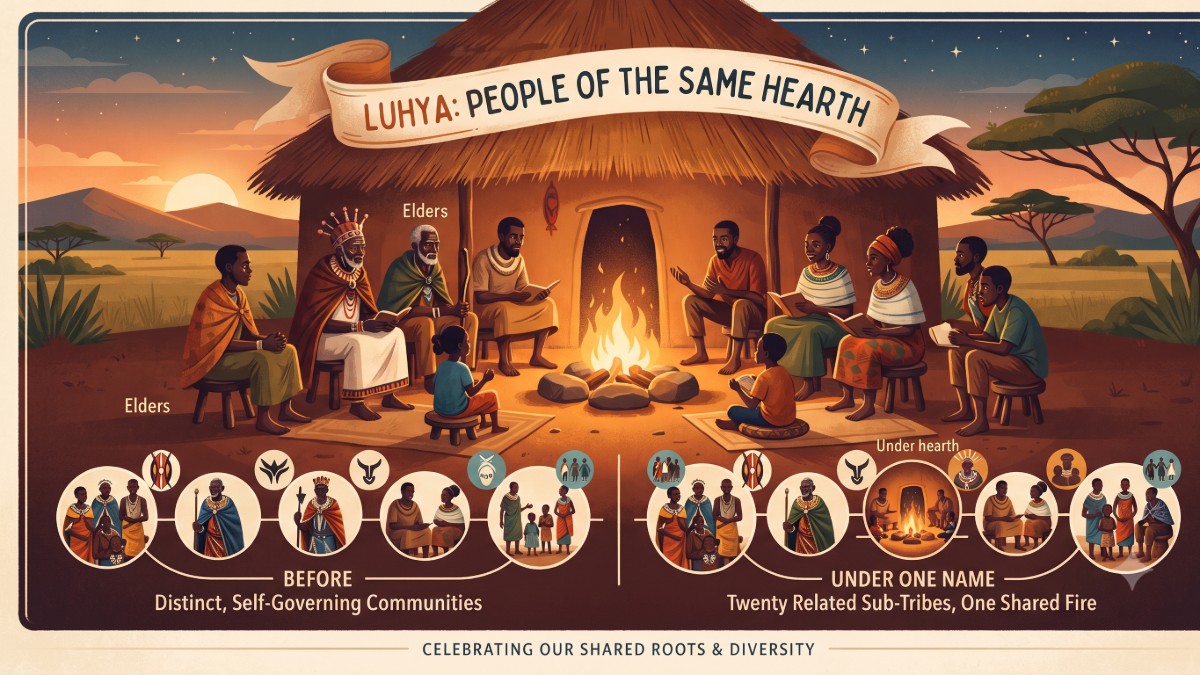
Culture, roots, and colonial history (Luhya)
SECTION A, PART 5: Culture, roots, and colonial history