Every year, thousands of children and adults go missing across Kenya and beyond, and the first few hours are the ones that matter most. Yet the process of reporting a missing person is often slow, fragmented, and disconnected from the people who could actually help: the police, child protection officers, and ordinary members of the public who might just walk past that person on the street.
Here's a concept I've been thinking through called FindThem, aimed at closing that gap.
The Problem
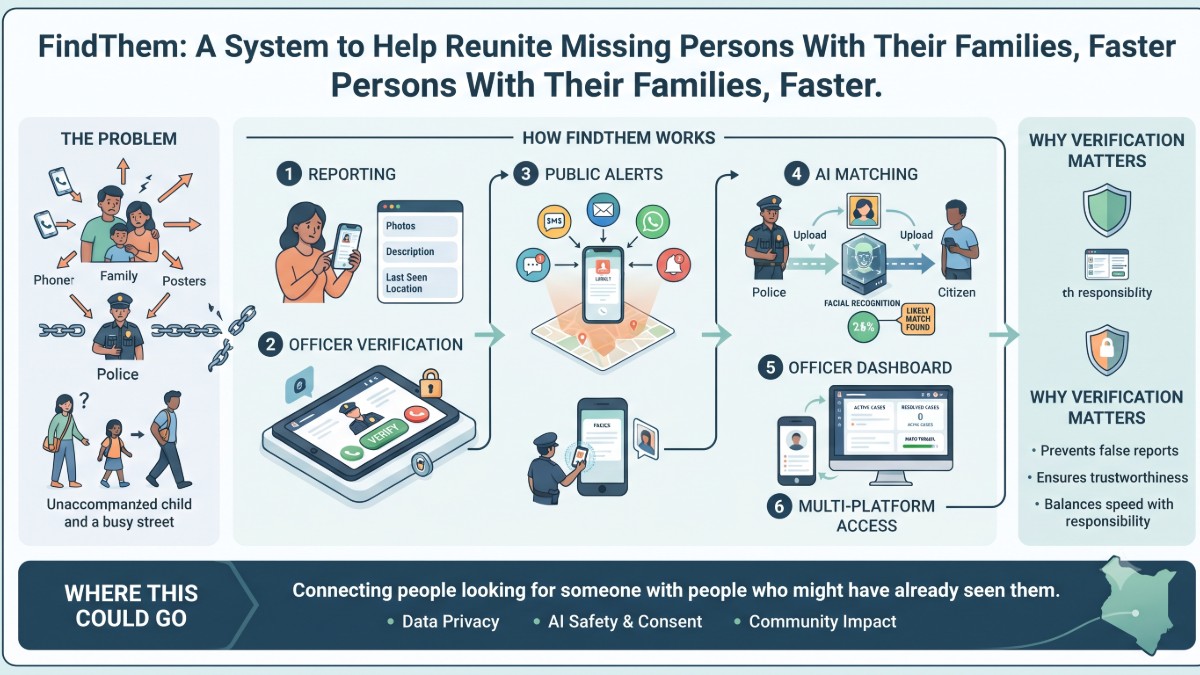
When someone goes missing, families are often left making phone calls, printing posters, and posting on social media, hoping the right person sees it at the right time. Meanwhile, law enforcement and child protection officers may not receive verified, structured reports quickly enough to act. And even when a member of the public spots someone who looks like a missing person, there's usually no easy way to connect that sighting to an official report.
How FindThem Works
1. Reporting a missing person
A family member or guardian creates an account and submits a report: up to 10 clear photos of the missing person, a description, the circumstances and last known location, and verified contact information.
2. Officer verification
The report doesn't go live to the public immediately. It first alerts a duty officer at the relevant department (children's services, police, or another responsible authority), who reviews the case, calls the person who submitted it to confirm the details, and then approves it for public alerting. This verification step is designed to prevent false reports and misuse while keeping the response time short.
3. Public and community alerts
Once approved, the system pushes notifications through multiple channels: SMS, email, WhatsApp, and in-app alerts, targeted by location using GPS. Someone in the same constituency or county as the last known sighting is notified first, since they're the most likely to be able to help.
4. Found-person matching with AI
If someone, whether a police officer or a member of the public, comes across a person who appears to be lost or unaccompanied, they can upload clear photos through the app. The system then runs those images through a facial recognition model against the active database of missing persons and surfaces likely matches to the uploader and to the responsible officer.
5. Officer dashboard
Officers get a dedicated dashboard to manage active cases, review incoming found-person matches, confirm or dismiss alerts, and close cases once someone is safely reunited with their family.
6. Multi-platform access
The system is designed as a mobile app for reporting, searching, and receiving alerts, paired with a web app for wider accessibility, so it isn't limited to smartphone owners alone.
Why the Verification Step Matters
A system like this only works if it's trustworthy. Unverified reports could cause panic, misidentify innocent people, or be abused. By requiring a human officer to confirm details before a case goes public, FindThem tries to strike a balance between speed and responsibility, fast enough to matter, careful enough to be trusted.
Where This Could Go
This is still just an early-stage concept, and there's a lot to work through: data privacy safeguards, consent for facial recognition use, integration with existing police and child protection systems, and making sure the technology serves vulnerable communities well rather than creating new risks. But the core idea is simple: connect the people looking for someone with the people who might have already seen them, as quickly and safely as possible.
If you work in child protection, law enforcement, or health tech, or if you've thought about a similar problem, I'd love to hear your perspective.
Get in touch: saulmupalia.online/contact